
Projects
Making an AI tool more transparent
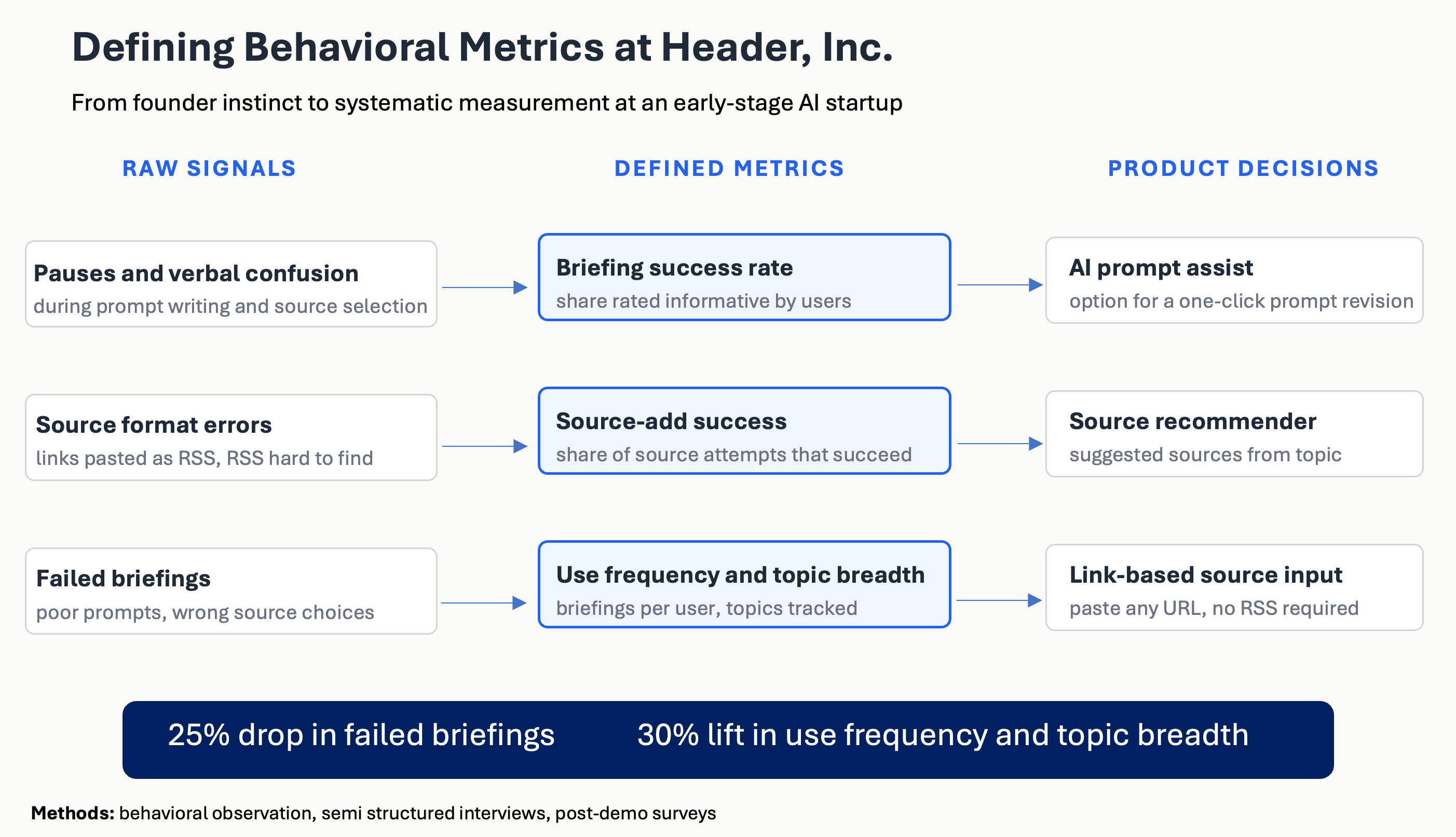
Header, an early-stage AI startup that uses LLMs to enable new ways to consume content and follow creators. Users create topics of interest, add custom or curated sources, and generate briefings. I introduced the first systematic research practice at Header.
My goal was to ensure use was intuitive and transparent for all users. Because the early-adopters were high in AI literacy and technical fluency, I studied people who were not.
I took a quick approach with no budget: sending it around to friends and family who don’t often use LLMs, interviewing and observing them. I surfaced two main friction points (prompt writing, source selection) that drove three product changes: AI-assisted prompt revision, AI-assisted source recommender, and link-based source input that removed the RSS hunt.
Among users with low prior AI exposure, failed briefings dropped 25% and use frequency and topic breadth lifted 30%.
Methods: Moderated interviews, behavioral observation, in-product surveys, prototype testing, A/B testing
Optimizing Remote Research for Young Children
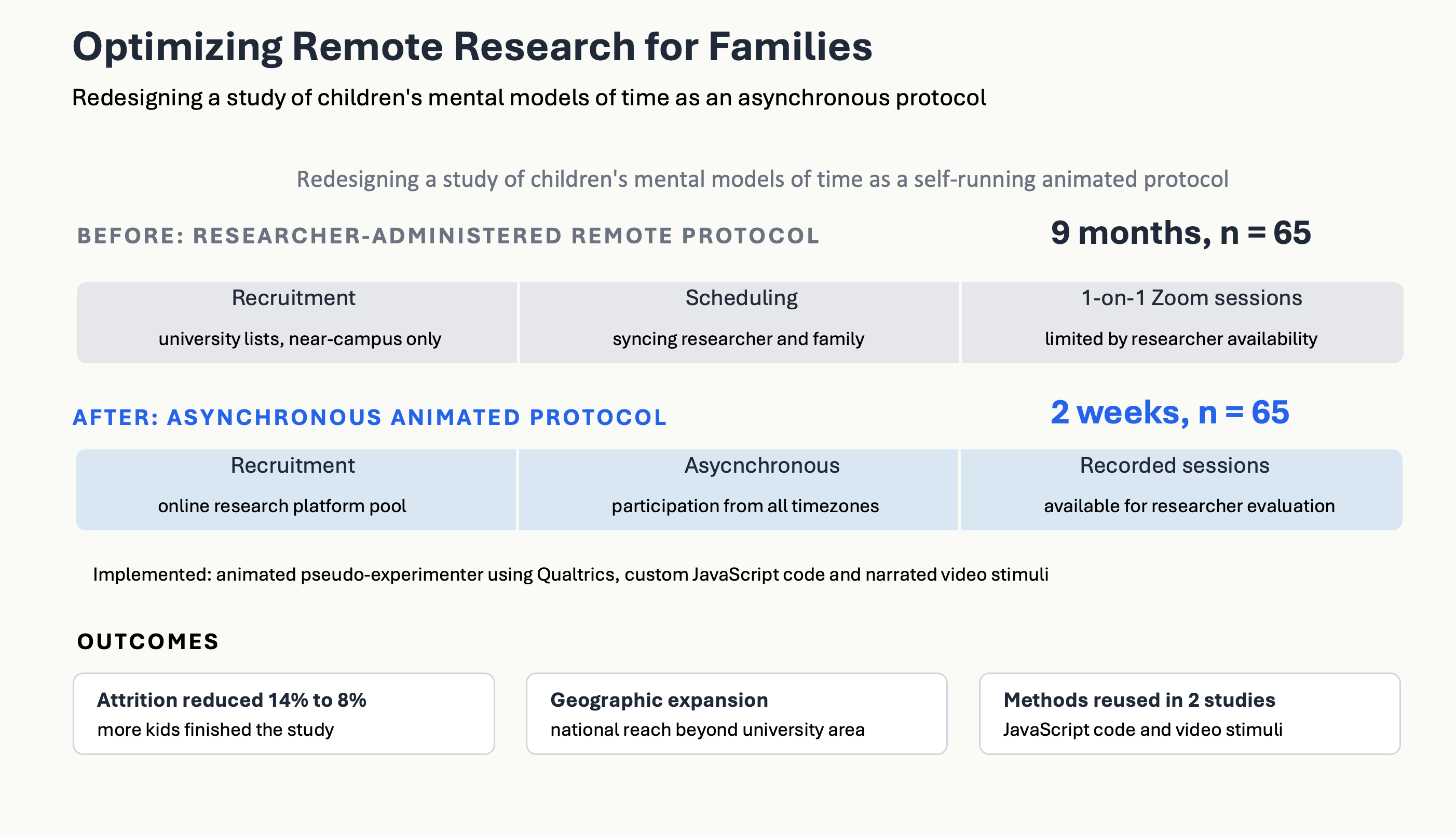
I redesigned an in-person study of 5-year-olds’ mental models of time as a parent-led, asynchronous online protocol. The original researcher-administered version took 9 months to reach n = 65. After a failed first attempt at parent-administered training videos, I built an animated pseudo-experimenter (narrated video stimuli with contingent feedback, wired together in Qualtrics with custom JavaScript) so parents only needed to press play. The redesigned protocol collected the same n = 65 in 2 weeks, attrition dropped from 14% to 8%, and geographic reach expanded beyond the area near the university. The custom code and stimulus methods have since been adopted in two other studies in the lab.
Methods: Iterative pilot testing, asynchronous protocol design, custom stimulus delivery, attention-friendly pacing
Check back in for more projects!